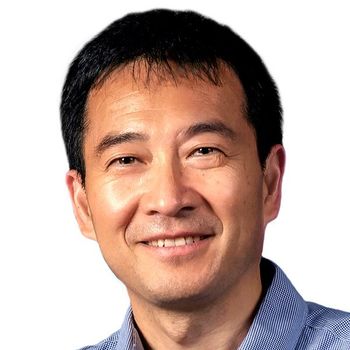
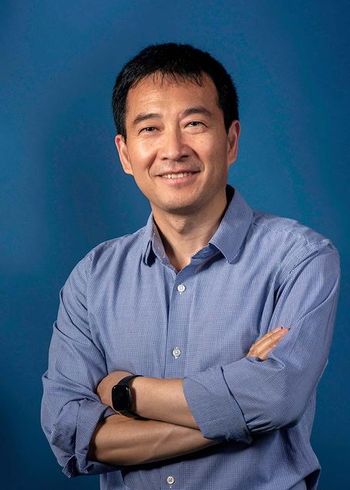
At Pittcon 2026 in San Antonio, Texas, Igor Lednev, a Distinguished Professor and Williams-Raycheff Endowed Professor at the University at Albany, State University of New York, presented his ongoing research in forensic analysis.1 As part of Spectroscopy magazine’s coverage of this conference, we sat down with Lednev to ask him about his research and the latest trends and developments that he is observing in spectroscopy and analytical science.
Our conversation with Lednev concentrated on how advanced statistical methods are being deployed in forensic analysis. According to Lednev, using statistical methods have now become a necessity.
“We really need machine learning approaches in order to analyze a large spectroscopic data sets, which we get by using Raman spectroscopy of body fluid traces,” Lednev said during our conversation.
In our first video clip with Lednev, we covered several topics. First, Lednev reacted to being recognized as the 2026 Pittsburgh Spectroscopy Award recipient, highlighting what it means to him and his research.2 We also asked him about how machine learning (ML) and Raman spectroscopy are being used for forensic purposes in biomedical applications.2 This topic was the focus of his award lecture at Pittcon, which was titled, “Raman Spectroscopy and Machine Learning for Forensic Purposes Biomedical Applications.”
The below video clip expands on the first clip by highlighting the application of advanced statistics in forensic analysis, particularly in the development of software for Raman spectroscopic data analysis, which eliminates personal bias and provides confidence levels or error bars for conclusions. Additionally, it discusses the use of machine learning for analyzing large spectroscopic datasets from body fluid traces to determine characteristics like sex, race, and age group, and to estimate the time since deposition.